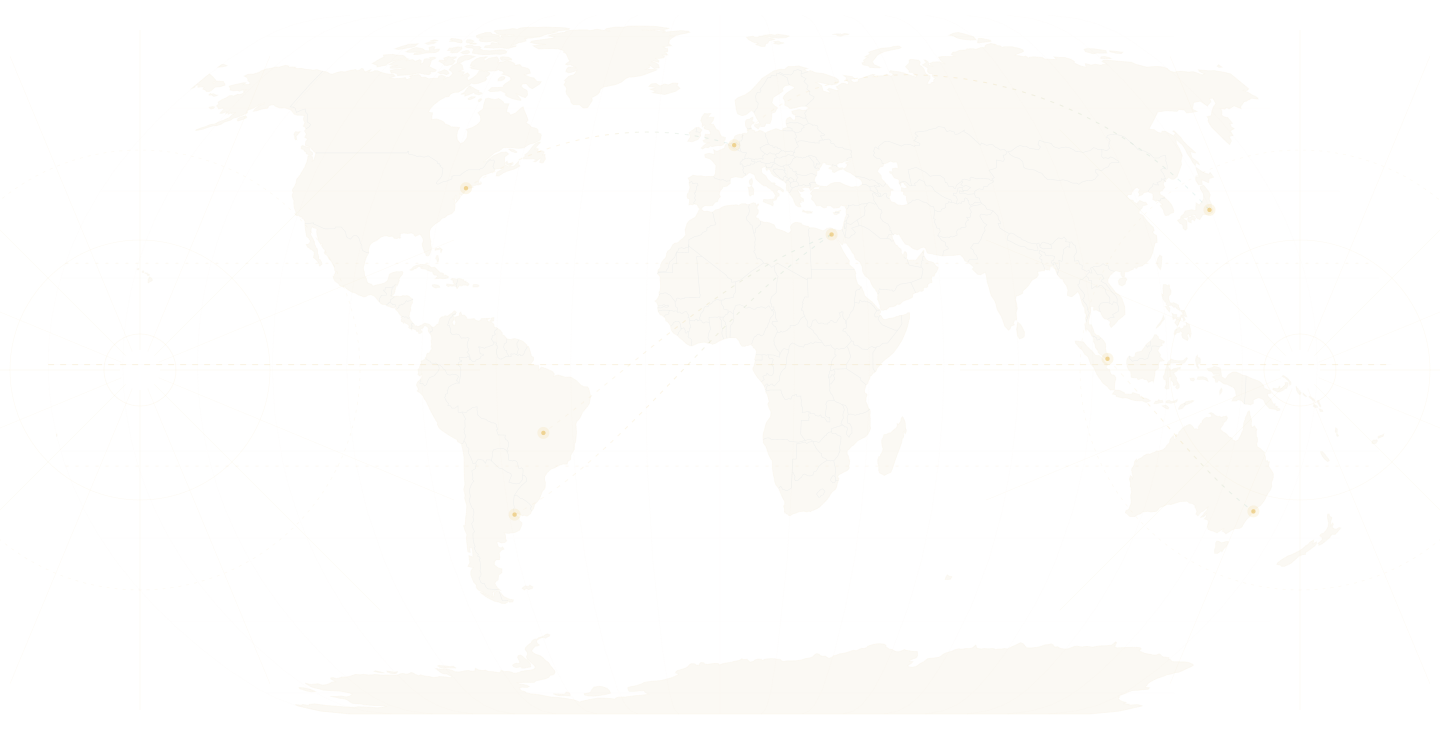
North Atlantic and Arctic states rendered in Natural Earth projection to limit polar distortion, showing the GIUK Gap naval monitoring line (dashed blue) linking Greenland, Iceland, and the United Kingdom alongside the 3,530-km Atlantic link between Copenhagen and Nuuk (dashed gold).
1. The Map Paradox: North American Geography, Danish Sovereignty
Open a map of the Northern Hemisphere and Greenland immediately stands out as a political anomaly. Geologically and geographically, the island belongs to North America. Across the narrow Nares Strait in the far northwest, Greenland lies just 26 kilometers from Canada’s Ellesmere Island, and since June 2022 the two jurisdictions share a 1.2-kilometer international land border across Hans Island.
Yet Nuuk, Greenland’s capital, sits roughly 3,530 kilometers across the North Atlantic from Copenhagen, the capital of the Kingdom of Denmark. Covering 2.166 million square kilometers, Greenland is roughly 50 times larger than mainland Denmark, though about 80 percent of its surface is buried under the Greenland Ice Sheet. Its population of roughly 56,500 people, the vast majority of whom are Inuit, lives almost entirely in coastal towns and settlements where no two communities are connected by road.
How a North American Arctic island became part of a European kingdom has nothing to do with physical proximity and everything to do with medieval North Atlantic sea lanes, Scandinavian dynastic unions, and 19th-century European diplomacy.
2. From Norse Voyages to the 1814 Treaty of Kiel
Indigenous Arctic peoples inhabited Greenland for millennia before Europeans arrived, and the ancestors of modern Greenlandic Inuit (the Thule culture) migrated eastward from northern Canada beginning around the 13th century. Earlier, in the late 10th century (traditionally 985-986), Norse settlers sailing west from Iceland under Erik the Red established farming communities in southern Greenland. In 1261, those Norse settlements formally accepted the authority of the King of Norway.
That Norwegian link is the reason Denmark entered the picture. In 1380, Norway entered a royal union with Denmark that lasted more than four centuries (and was formally tightened in 1536). Even after the medieval Norse settlements in Greenland vanished during the 15th century due to cooling climates and disrupted European trade, the Dano-Norwegian crown never relinquished its claim. In 1721, Norwegian-Danish Lutheran missionary Hans Egede sailed to Greenland’s west coast with royal backing, founding Godthab (modern Nuuk) and initiating modern colonial administration and trade.
The decisive map shift arrived in 1814 during the collapse of Napoleon’s empire. Denmark-Norway had allied with France, and following military defeat, King Frederick VI signed the Treaty of Kiel on January 14, 1814, ceding mainland Norway to the King of Sweden. Crucially, Article 4 of the treaty excluded Norway’s historic North Atlantic dependencies. Iceland, the Faroe Islands, and Greenland remained under the Danish Crown, separating Greenland from Norway permanently.
3. How International Law Confirmed Danish Rule (1916-1933)
Keeping Greenland on paper in 1814 did not automatically settle sovereignty over the entire island, because Danish settlements were concentrated along the west coast while much of eastern and northern Greenland remained sparsely charted. Two early 20th-century milestones secured international recognition of Denmark’s claim over all of Greenland.
The first was tied to the Caribbean. During World War I, the United States wanted to purchase the Danish West Indies (today’s U.S. Virgin Islands) to prevent Germany from acquiring naval bases near the newly opened Panama Canal. Denmark agreed to sell the Caribbean islands for $25 million in gold under a 1916 treaty (completed in 1917). In exchange, on August 4, 1916, U.S. Secretary of State Robert Lansing issued a formal declaration stating that the United States would not object to Denmark extending its political and economic interests to the whole of Greenland.
The second milestone came from a direct dispute with independent Norway, which had dissolved its union with Sweden in 1905. In June 1931, Norwegian trappers backed by Oslo occupied a section of uninhabited East Greenland and proclaimed it "Erik the Red’s Land" (Eirik Raudes Land). Denmark took the case to the Permanent Court of International Justice in The Hague. On April 5, 1933, the court ruled 12-2 in Denmark’s favor, pointing to continuous Danish legislative activity, international assurances such as the 1916 Lansing Declaration, and a 1919 diplomatic statement by Norwegian Foreign Minister Nils Claus Ihlen. Norway accepted the verdict and withdrew.
4. From Danish Colony to Home Rule and the 2009 Self-Government Act
Greenland’s internal status changed dramatically after World War II. When Germany occupied Denmark in April 1940, local officials in Greenland cooperated directly with the United States for supply lines and weather stations, ending centuries of closed Danish trade monopoly. In 1953, Denmark amended its constitution to end Greenland’s formal status as a colony, integrating the island as a Danish county with representation in the Danish Parliament.
Rapid Danish-led modernization during the 1950s and 1960s, combined with growing Inuit political organization, led to demands for local autonomy. In 1979, Greenland gained Home Rule, establishing its own parliament (Inatsisartut) and government (Naalakkersuisut). Six years later, in 1985, Greenland withdrew from the European Economic Community (the predecessor to the European Union) after a referendum driven by concerns over European fishing quotas in Greenlandic waters.
On June 21, 2009, following a 2008 referendum approved by more than 75 percent of voters, the Act on Greenland Self-Government took effect. The law recognizes Greenlanders as a distinct people under international law, gives Nuuk authority over domestic governance and subsurface natural resources, and outlines a clear legal pathway to full independence under Section 21 through a local referendum and negotiations with Denmark. Copenhagen retains authority over foreign policy, defense, and currency, and provides an annual block grant that still funds a substantial portion of Greenland’s public budget.
| Period | Legal Status | Key Authority in Nuuk | Role of Copenhagen |
|---|---|---|---|
| 1721-1953 | Danish Colony | Limited local councils; trade managed by Royal Greenland Trade Department | Direct colonial administration and trade monopoly |
| 1953-1979 | Danish County (Amt) | Two seats in the Danish Parliament; local municipal councils | Full constitutional integration and state-led modernization |
| 1979-2009 | Home Rule (Hjemmestyre) | Own parliament and government; control over fisheries, education, and local taxes; exited EEC in 1985 | Retained defense, foreign policy, judiciary, and resource co-management |
| 2009-Present | Self-Government (Selvstyre) | Control over domestic policy and subsurface mineral rights; legal path to independence (Section 21) | Defense, foreign affairs, currency, and annual block grant |
5. Why Greenland Sits at the Center of Arctic Strategy Today
Three overlapping geographic realities explain why Greenland regularly appears in global security and economic headlines in 2025 and 2026: polar missile trajectories, North Atlantic naval chokepoints, and Arctic climate and mineral shifts.
First, the shortest flight path between North America and northern Eurasia runs directly over the Arctic. Under the April 1951 U.S.-Denmark Defense Agreement (updated with Greenlandic participation in the 2004 Igaliku Agreement), the United States operates Pituffik Space Base (formerly Thule Air Base) in northwestern Greenland. Positioned roughly 1,200 kilometers north of the Arctic Circle, its upgraded early-warning radar monitors polar ballistic missile corridors and tracks satellites.
Second, Greenland forms the western anchor of the GIUK Gap (Greenland, Iceland, and the United Kingdom). Naval vessels and submarines from Russia’s Northern Fleet on the Kola Peninsula must transit these North Atlantic waters to reach open ocean shipping lanes and undersea communications cables linking North America and Europe. As warming temperatures reduce Arctic sea ice, Greenland also overlooks expanding seasonal access along the Northwest Passage and potential future Transpolar routes.
Third, Greenland holds significant estimated deposits of rare earth elements, zinc, iron ore, and graphite, attracting Western and Asian interest as countries diversify critical mineral supply chains, though harsh Arctic weather and the absence of inter-town roads keep extraction costs high. Renewed U.S. political interest in acquiring or expanding strategic control over Greenland in 2025 and 2026 prompted close coordination between Nuuk, Copenhagen, and NATO allies. Across Greenland’s political spectrum, including during the March 2025 parliamentary election, leaders have emphasized that Greenland’s future belongs to its people, balancing long-term aspirations for economic self-reliance with existing Arctic security partnerships.