
1. Four Historical Reasons Capitals Sit Outside the Largest City
Commercial metropolises almost always grow around deep natural harbors, trade rivers, or industrial railheads. Political capitals, by contrast, are often chosen to hold a diverse federation together or shift power away from vulnerable coasts.
Four recurring historical patterns explain nearly all 25 exceptions: (1) compromise cities carved out between rival regions (Canberra, Ottawa, Washington, D.C.), (2) post-independence inland moves intended to stimulate the interior or neutralize regional dominance (Brasilia, Abuja, Dodoma, Astana, Islamabad), (3) natural-disaster or security relocations (Belmopan after Hurricane Hattie, Ankara during the Turkish War of Independence), and (4) older royal or administrative seats outgrown by maritime ports (Rabat, Quito, Hanoi, Bern, Wellington).
2. Compromise & Purpose-Built Capitals
When Australia federated in 1901, neither Sydney nor Melbourne would concede the capital title, so Section 125 of the Constitution mandated a new capital at least 100 miles from Sydney, producing Canberra (designed by Walter Burley Griffin and Marion Mahony Griffin). In 1857, Queen Victoria chose Ottawa along the Rideau Canal partly because it sat on the Ontario-Quebec linguistic frontier and farther from potential United States border raids than Montreal or Toronto.
Later 20th-century relocations followed similar logic: Nigeria carved out the Federal Capital Territory around Abuja in 1976 (officially inaugurated in 1991) so no single major ethnic region controlled the capital; Kazakhstan shifted north from earthquake-prone Almaty to Astana in 1997; and Belize constructed Belmopan 80 kilometers inland after Hurricane Hattie devastated coastal Belize City in 1961.
| Country | Official Capital | Common Mistake (Largest City) | Historical Context |
|---|---|---|---|
| Australia | Canberra | Sydney / Melbourne | Compromise planned city established in 1913 between rivals Sydney and Melbourne |
| Brazil | Brasilia | Sao Paulo / Rio de Janeiro | Inaugurated in 1960 in the central highlands to spur interior development |
| Canada | Ottawa | Toronto | Chosen in 1857 on the Ontario-Quebec border, inland from Lake Ontario |
| United States | Washington, D.C. | New York City | Created by the 1790 Residence Act along the Potomac between northern and southern states |
| Nigeria | Abuja | Lagos | Replaced congested coastal Lagos in 1991 with a neutral central federal territory |
| Pakistan | Islamabad | Karachi | Purpose-built northern capital constructed in the 1960s to replace southern port Karachi |
| Myanmar | Naypyidaw | Yangon | Relocated inland in 2005-2006 to a central basin north of former capital Yangon |
| Kazakhstan | Astana | Almaty | Moved north to the central steppe in 1997 from seismic southeastern Almaty |
| Belize | Belmopan | Belize City | Built inland on higher ground after Hurricane Hattie damaged Belize City in 1961 |
| Palau | Ngerulmud | Koror | Moved from Koror to Babeldaob island in 2006; the least-populous national capital |
3. Historic, Royal & Federal Political Seats
Elsewhere, older political capitals stayed put while coastal ports or financial hubs grew much faster. After the collapse of the Ottoman Empire, Mustafa Kemal Ataturk named Ankara capital of the new Turkish Republic in 1923, signaling a break with imperial Constantinople (Istanbul) and anchoring government in central Anatolia. In New Zealand, parliament moved from Auckland south to Wellington in 1865 so lawmakers from the booming South Island goldfields could reach Cook Strait more easily.
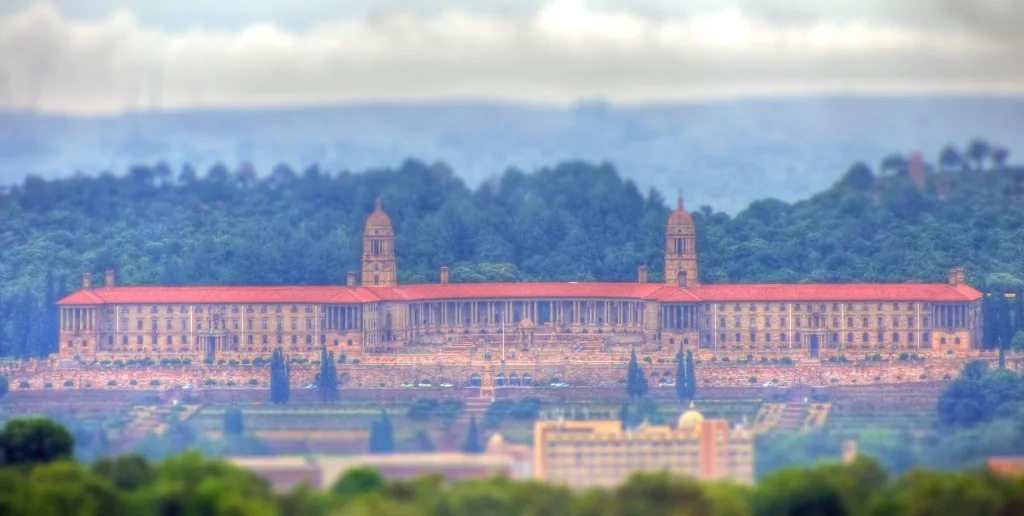
Several states also split governmental branches across more than one city: South Africa distributes executive power in Pretoria, parliament in Cape Town, and the Supreme Court of Appeal in Bloemfontein; Bolivia keeps its constitutional seat in historic Sucre while the presidency and legislature operate in high-altitude La Paz.
| Country | Official Capital | Common Mistake (Largest City) | Historical Context |
|---|---|---|---|
| Turkey | Ankara | Istanbul | Selected in 1923 as the new republic’s central Anatolian capital |
| Switzerland | Bern | Zurich / Geneva | Federal city since 1848 bridging German- and French-speaking cantons |
| New Zealand | Wellington | Auckland | Moved south from Auckland in 1865 to sit centrally on Cook Strait |
| Morocco | Rabat | Casablanca | Historic royal and administrative capital; Casablanca is the chief port and commercial hub |
| South Africa | Pretoria (Admin.) | Johannesburg | Executive seat in Pretoria; legislative in Cape Town; judicial in Bloemfontein |
| Tanzania | Dodoma | Dar es Salaam | Designated in 1973 to place government in the central interior rather than on the coast |
| Ivory Coast | Yamoussoukro | Abidjan | Designated official capital in 1983 while coastal Abidjan remains the economic center |
| India | New Delhi | Mumbai | Inaugurated in 1931 as the northern administrative capital; Mumbai is the western financial hub |
| China | Beijing | Shanghai | Imperial "Northern Capital" since the Ming dynasty; Shanghai grew around the Yangtze estuary |
| Vietnam | Hanoi | Ho Chi Minh City | Millennium-old Red River Delta capital in the north vs. larger southern commercial metropolis |
| United Arab Emirates | Abu Dhabi | Dubai | Largest emirate by area holds the federal capital; Dubai is the main trade and tourism hub |
| Ecuador | Quito | Guayaquil | High-altitude Andean capital near the Equator vs. Pacific port Guayaquil |
| Bolivia | Sucre (Const.) | Santa Cruz / La Paz | Sucre is the constitutional capital; La Paz hosts the executive and legislative branches |
| Sri Lanka | Sri Jayawardenepura Kotte | Colombo | Legislative capital adjacent to commercial and former capital Colombo |
| Cameroon | Yaounde | Douala | Inland capital on the central plateau vs. Atlantic port Douala |
4. Smaller Nations With the Same Pattern
The same split appears in several smaller countries: Liechtenstein’s capital is Vaduz (rather than slightly larger Schaan), Malta’s capital is historic fortress-city Valletta (rather than St. Paul’s Bay or Birkirkara), San Marino’s capital is the hilltop City of San Marino (rather than commercial Dogana), and Malawi moved its capital north from Blantyre to Lilongwe in 1975.
In the Pacific and West Africa, note the Federated States of Micronesia (capital Palikir on Pohnpei, rather than Weno) and Benin (official capital Porto-Novo, while neighboring Cotonou is the larger port and seat of government).