
Visual Side-by-Side Flag Comparisons
Authentic national flag references showing the exact shade, proportion, stripe order, or emblem detail that separates each lookalike pair:
Romania vs. Chad
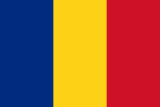
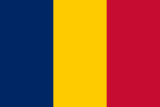
Both use a 2:3 vertical blue-yellow-red tricolor. Chad uses darker indigo on the hoist; Romania uses brighter cobalt blue.
Monaco vs. Indonesia vs. Poland
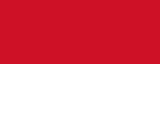
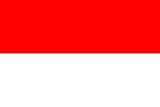
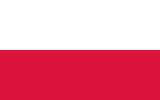
Monaco (4:5) is nearly square and Indonesia (2:3) is wider, both with red on top. Poland puts white on top.
Ireland vs. Ivory Coast

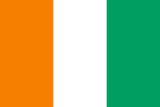
Ireland places green on the hoist (left) stripe; Ivory Coast mirrors it with orange on the hoist.
Mali vs. Guinea
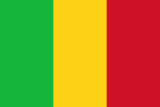
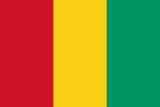
Both use vertical Pan-African stripes with no emblem. Mali runs green-yellow-red; Guinea reverses it to red-yellow-green.
Senegal vs. Cameroon
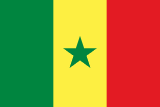
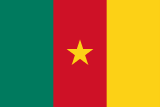
Senegal places a green star on a yellow center band (green-yellow-red). Cameroon places a yellow star on a red center band (green-red-yellow).
Netherlands vs. Luxembourg
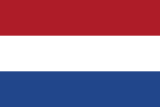
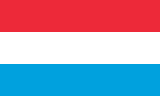
Luxembourg uses light sky blue and a wider 3:5 proportion; the Netherlands uses deeper cobalt blue in a 2:3 ratio.
Bahrain vs. Qatar

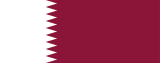
Bahrain is bright red with 5 white points. Qatar is maroon, noticeably wider (11:28), and has 9 white points.
Australia vs. New Zealand

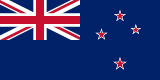
Australia displays a large 7-pointed white Commonwealth Star below the Union Jack and white Southern Cross stars. New Zealand has four red stars outlined in white.
Russia vs. Slovakia vs. Slovenia
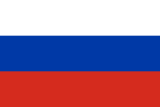
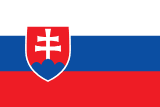
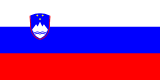
Russia has plain white-blue-red stripes. Slovakia places a large red shield left of center; Slovenia puts a smaller shield in the upper-left corner.
Honduras vs. El Salvador vs. Nicaragua
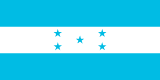
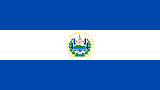
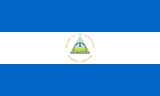
All three keep the blue-white-blue bands of the 1823 Central American republic: Honduras uses five blue stars; El Salvador uses a laurel-framed emblem; Nicaragua uses a circular text ring around a triangle.
1. Independent Coincidences and Medieval Heraldry
Several of the world’s closest flag twins developed thousands of kilometers apart with completely unrelated histories. Monaco’s red-over-white bicolor (adopted officially in 1881) comes from the heraldic red-and-white lozenges of the House of Grimaldi, documented as early as 1339. Indonesia’s Sang Saka Merah Putih (raised at independence in 1945) traces its red and white back to the 13th-century Majapahit Empire in Java. Poland’s white-over-red banner reverses the order because it derives from the medieval Piast coat of arms: a white eagle (top) on a red shield (bottom).
Ireland and Ivory Coast offer a second independent mirror. Irish nationalist Thomas Francis Meagher unveiled the green-white-orange tricolor in Waterford in 1848, inspired by the French tricolor, with green representing the Catholic tradition, orange the Protestant Williamite tradition, and white peace between them. In 1959, Ivory Coast chose orange-white-green with no reference to Ireland: orange stands for the northern savannas, white for peace, and green for the southern coastal forests.
The Netherlands and Luxembourg look alike because of neighboring European history, yet their designs have distinct origins. The Dutch tricolor evolved from the 16th-century orange-white-blue Prince’s Flag (Prinsenvlag) of William of Orange, gradually darkening orange to red for visibility at sea. Luxembourg’s horizontal stripes come from the medieval red lion on white-and-blue bars of the House of Luxembourg. To separate the two banners formally, Luxembourg passed a 1972 law specifying a lighter sky blue and wider 3:5 ratio.
2. Why Bahrain and Qatar Share a Serrated White Edge
Bahrain and Qatar share the same distinctive zigzag hoist because of the General Maritime Treaty of 1820 between Britain and Arab Gulf rulers. Traditional Gulf ships flew solid red flags; under the treaty, signatory emirates added a white vertical strip on the hoist side to distinguish peaceful merchant vessels from raiders.
Bahrain later turned the straight dividing line into a serrated edge to stand apart from neighboring emirates, fixing the count at five white triangles in 2002 to represent the Five Pillars of Islam. Qatar’s traditional crimson dye historically weathered into purple-maroon under the Gulf sun, a color officially codified as maroon (Al Adaam) in the 1930s. After signing its 1916 treaty with Britain, Qatar settled on nine serrated points to mark its place as the ninth reconciled emirate of the Persian Gulf.
4. The Five Sovereign Nordic Crosses
All five sovereign Nordic countries share the off-center cross proportion first carried by Denmark’s Dannebrog, reflecting centuries of Scandinavian dynastic union (the Kalmar Union, 1397 to 1523) and subsequent independence movements. Checking whether the cross is single-color or outlined in white separates all five immediately:
- Denmark: Red field with a single white cross (oldest national flag design still in use).
- Sweden: Blue field with a single yellow cross, adopted under King Gustav Vasa in the 16th century from the royal three-crowns arms.
- Finland: White field with a single blue cross, adopted in 1918 after independence from Russia to represent winter snow and Finland’s lakes.
- Norway: Red field with a dark blue cross outlined in white, chosen by the Norwegian parliament in 1821 by adding blue to Denmark’s historic red-and-white colors.
- Iceland: Blue field with a red cross outlined in white (the direct color inversion of Norway), symbolizing the Atlantic Ocean, glacial ice, and volcanic fire.